
Project Based Learning: What and Why

Project Based Learning: What and Why


What is Project Based Learning?
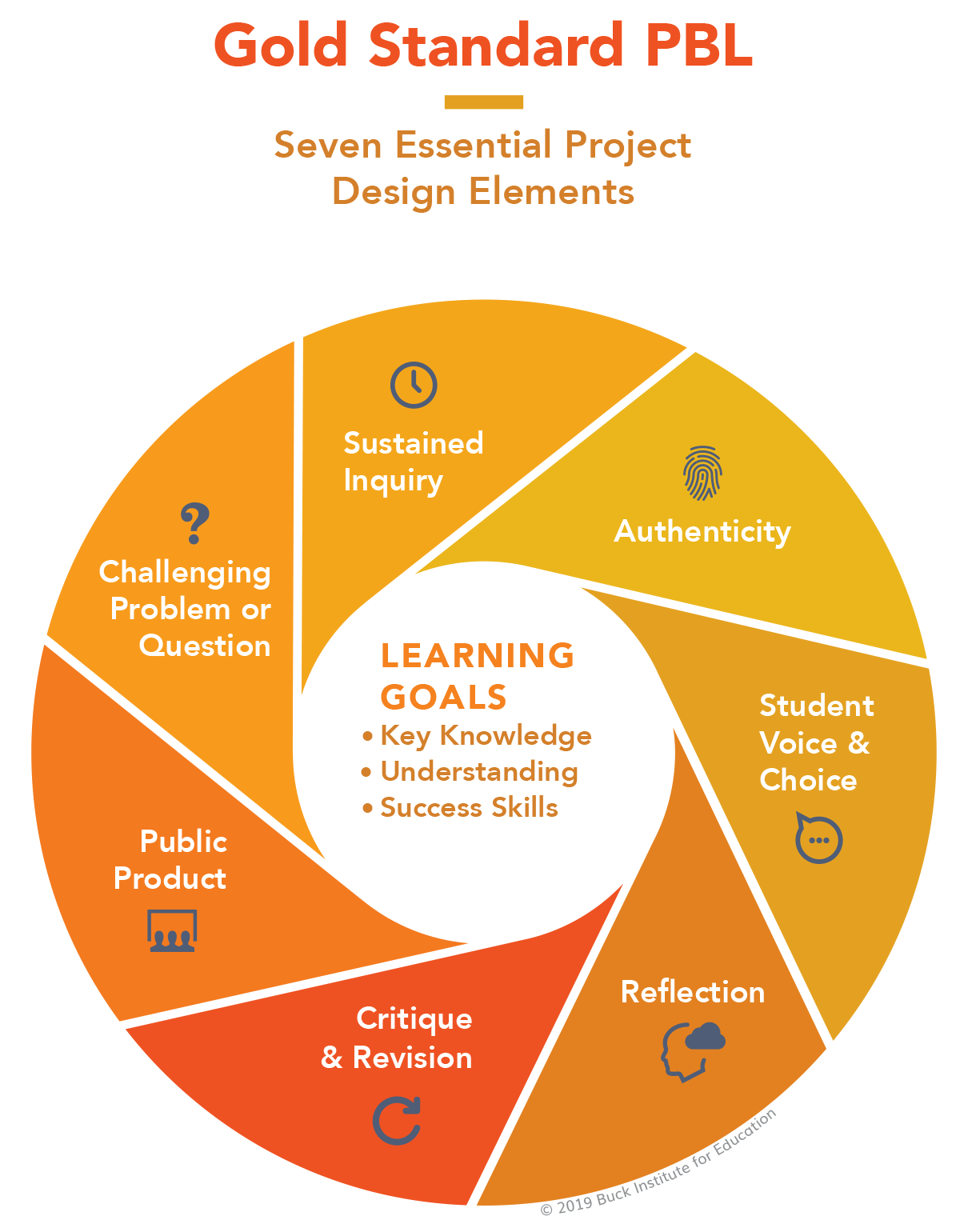

Image result for project based learning
https://www.pblworks.org/what-is-pbl

Project Based Learning is a teaching method in which students learn by actively engaging in real-world and personally meaningful projects (What is PBL). The students engage in problem solving projects that require them to use the skills that they have learned in class.


Design Thinking and Project Based Learning  work together in formulating a great project. In my experience, you have to develop an empathy for the problem at hand. They develop an sense of understanding as to why the problem needs to be solved. 

After developing a sense of empathy, they (the students)  then begin to think of possible ways and tacktics that could be used to solve the problem. This means trying to figure out how to use the skills from what they have learned from class. Trying to create the connection between world problems and class learning. 


The infograph explains the IDEO and Stanford d School idea of design thinking when used for project based learning. The process are similar, but Stanford d School has a few more steps that I feel are needed in the process.

Reference 

WHAT is PBL. (n.d.). Retrieved from https://www.pblworks.org/what-is-pbl


Comments

Popular posts from this blog

The Educated Black Woman

Introduction Introduction Hello, my name is Taylor Owens. I currently work in the field of education as a third grade teacher, and currently working towards receiving my Master’s degree in Curriculum Instruction.With the experience of working with teachers, administrators, and students, I have the  ability to think outside of the box to create a lesson that is engaging to the students, as well as easier for the teachers to teach. Schools will benefit from my services by students becoming the people that they dream to be, and teachers being able to provide the best lessons to make dreams come true.  The completion of my graduate degree has helped me gain a better understanding on what I could do better as an educator, as well as a leader in the school. I have learned about what I need to improve on as a future curriculum specialist. I am eager to portray all that I have learned in the field.  The learning outcomes of the course can be implemented into an e...

Contemporary Educational Issues Trends and Challenges

            Your small support could accomplish a big dream. Mohammad Rishad sakh          In the world of education, there are always going to be changes within the system. These changes can be challenging to face alone, but with a support system there is nothing to hard. The ones that will be impacted the most from the changes in eduction are the learners.These changes are what we are tryingto create within the education system. The learners are the ones that need to develop a support system during these changes. This is because they will need someone to hold them accountable, and feed them the determiniation that they need to get through the challenges.                In terms of creating change, one point is clear: the foundation of a culture of shared beliefs has to be strong. This means that everyone should havea strong belief on the challenge, andit should be the same belief. ...

Take the Test!!

What’s The Issue with Testing? The issue is small, but it makes a huge impact. Testing.  Is it necessary or not? The education system consists of multiple standardized tests. These students will take these tests while in school, and sometimes outside of school. There are tests to take for the state, and then there are test to get into a college or university.  ALL of these tests are to ensure that the student has achieved college readiness. But what does college readiness mean truly mean? Lopez (2013) stated that, “College readiness is not the belief that every student will go to college. College readiness is the idea that every student deserves the opportunity to be educated in a way that prepares him or her for college if he or she chooses to attend”.  In the article Major Challenges Facing Public Schools in the United States , “National Center for Education Statistics research says that roughly 19 percent of public school students are not able to finish high s...